
Discussions concerning the modern nation of Israel frequently evoke passionate responses among believers. Many faithful individuals feel a profound sense of loyalty to the modern state of Israel. They frequently quote Scripture to justify their full, unwavering backing of the nation. This raises a crucial and timely question: Should Christians support everything Israel does?
When you look at the complexities of geopolitics and read the promises of the Old Testament, it is easy to blend political loyalty with spiritual devotion. Many believers wonder if criticizing a political or military action means they are disobeying God. But is that what the Bible actually teaches? Should we support everything Israel does, politically or militarily, simply because of what Scripture says?
Let us take a closer look at commonly quoted verses to see what the Bible truly teaches in context. We will explore how Christians can respond with both discernment and compassion, applying eternal truth to complex modern realities.
The Core Question: Should Christians Support Everything Israel Does?
To answer the question, “Should Christians support everything Israel does?”, we must first separate the spiritual covenant of the Bible from the political realities of the modern Middle East. The modern state of Israel was founded in 1948. While this historical event is significant, modern Israel operates as a secular democracy. It engages in military campaigns, political alliances, and complex foreign policy decisions just like any other sovereign nation.
When believers ask, “Should Christians support everything Israel does?”, they often conflate the biblical Israelites with the modern political state. God calls believers to love and seek justice for all people. Unconditional political support for any earthly government0-no matter its historical or biblical name-can conflict with the moral and ethical teachings of Jesus Christ.
Christians are called to hold all nations accountable to the standards of justice, righteousness, and mercy. This means we can love the Jewish people, honor God’s historical promises, and still question or disagree with the policies of the modern Israeli government. We must look at the scriptures carefully to understand our exact responsibilities as followers of Jesus.
Understanding the Biblical Context of Israel
A helpful way to approach the question, “Should Christians support everything Israel does?”, is to understand the differences between ancient biblical Israel and the modern geopolitical entity.
Ancient Israel vs. Modern State
| Feature | Ancient Biblical Israel | Modern State of Israel |
|---|---|---|
| Foundation | Established by God through covenants with Abraham, Isaac, and Jacob. | Established in 1948 by a United Nations mandate and political action. |
| Governance | Theocracy led by prophets, judges, and kings anointed by God. | Secular parliamentary democracy led by elected officials. |
| Purpose | To bring forth the Messiah and be a light to the surrounding nations. | To provide a safe, sovereign homeland for the Jewish people. |
| Criteria for Blessing | Conditional upon obedience to God’s moral and spiritual laws. | Governed by international law and political treaties. |
By viewing this table, you can see why answering “Should Christians support everything Israel does?” requires nuance. We cannot automatically apply biblical promises meant for a theocratic covenant community to a modern secular democracy.
Examining Key Bible Verses About Israel

Many believers cite specific scriptures when arguing for unwavering political support. Let us evaluate these passages to understand their proper context and see how they apply to the question: Should Christians support everything Israel does?
Genesis 12:3 – “Bless those who bless you”
“I will bless those who bless you, and whoever curses you I will curse; and all peoples on earth will be blessed through you.”
How It Is Often Used
Many people apply this verse directly to the modern nation of Israel. They believe that if a country or individual supports the Israeli government financially or politically, God will grant them favor. This is a primary driver behind why many answer “yes” when asked, “Should Christians support everything Israel does?”
The Biblical Context
God gave this promise to Abraham as an individual, not to a political nation-state. The covenant was fundamentally spiritual in nature. It culminated in the arrival of Jesus Christ, not in the establishment of a modern geopolitical border.
The Apostle Paul makes this incredibly clear in Galatians 3:16: “The promises were spoken to Abraham and to his seed… meaning one person, who is Christ.” Furthermore, Galatians 3:7 states, “Understand, then, that those who have faith are children of Abraham.”
The Biblical Response
Blessing Israel in a spiritual sense means honoring the covenant that God fulfilled in Jesus. Christians should absolutely support truth, righteousness, and justice. However, this does not mean uncritically aligning with the national decisions of any modern government. We are commanded to love all nations and seek justice for all people, as Micah 6:8 instructs us.
Psalm 122:6 – “Pray for the peace of Jerusalem”
“Pray for the peace of Jerusalem: may those who love you be secure.”
How It Is Often Used
Believers often cite this psalm as a direct command to stand behind modern Jerusalem no matter what policies the government enacts. If you are wondering, “Should Christians support everything Israel does?”, you have likely heard this verse used as justification for unconditional political backing.
The Biblical Context
This beautiful psalm is a specific call to pray for peace, not a mandate for political loyalty. In ancient times, Jerusalem was the physical center of worship for Israel. It was a spiritual city representing God’s presence on earth, housing the temple where sacrifices were made.
The Biblical Response
Jesus Himself wept over Jerusalem (Luke 19:41) because the city missed the time of its visitation. Today, our prayers should extend beyond a single city on a map. We pray for the shalom (peace and wholeness) of all people in the region. We pray for both Jews and Gentiles, hoping they might experience peace and ultimately come to know Christ. Praying for peace often means praying for the end of conflict, which may require opposing certain political or military actions.
Romans 11:26 – “All Israel will be saved”
“And in this way all Israel will be saved…”
How It Is Often Used
Some teachers suggest that ethnic Israel retains an automatic, separate place in God’s plan of salvation, regardless of their faith in Jesus Christ. They use this theology to answer “yes” to the question, “Should Christians support everything Israel does?”
The Biblical Context
In Romans 9 through 11, Paul wrestles deeply with his fellow Israelites’ rejection of the Messiah. However, Paul never states that salvation is automatic based on ethnicity or geography. In fact, he affirms the exact opposite in Romans 10:9: “If you declare with your mouth, ‘Jesus is Lord,’ and believe in your heart… you will be saved.”
Paul also clarifies his definition of the covenant community in Romans 9:6: “Not all who are descended from Israel are Israel.”
The Biblical Response
God’s incredible mercy is available to absolutely everyone. True Israel, in the New Covenant context, is defined by faith in Christ, not by bloodline or ethnicity. Christians should earnestly pray for the salvation of all nations, including the Jewish people. But we must not support sin, violence, or injustice in the name of fulfilling biblical prophecy.
Zechariah 2:8 – “Apple of His eye”
“Whoever touches you touches the apple of His eye.”
How It Is Often Used
You will often hear this verse used to suggest that criticizing the Israeli government is equal to offending God Himself. When people ask, “Should Christians support everything Israel does?”, this verse is frequently presented as a warning against any form of critique.
The Biblical Context
The prophet Zechariah wrote this to Zion-the specific group of people returning from Babylonian exile. It was given in a very specific historical and prophetic setting to encourage a devastated people that God still loved them and would protect them as they rebuilt the temple.
The Biblical Response
God certainly loved ancient Israel, but He also routinely rebuked them when they acted unjustly. You only need to read the prophets like Isaiah, Jeremiah, and Amos to see God harshly judging Israel for oppressing the poor and engaging in violence. In the New Covenant, God’s people include all believers in Christ. Being the “apple of His eye” now encompasses those who are born again by faith (Romans 2:28-29). We can love the Jewish people without endorsing the actions of a secular government.
The New Covenant and the Body of Christ
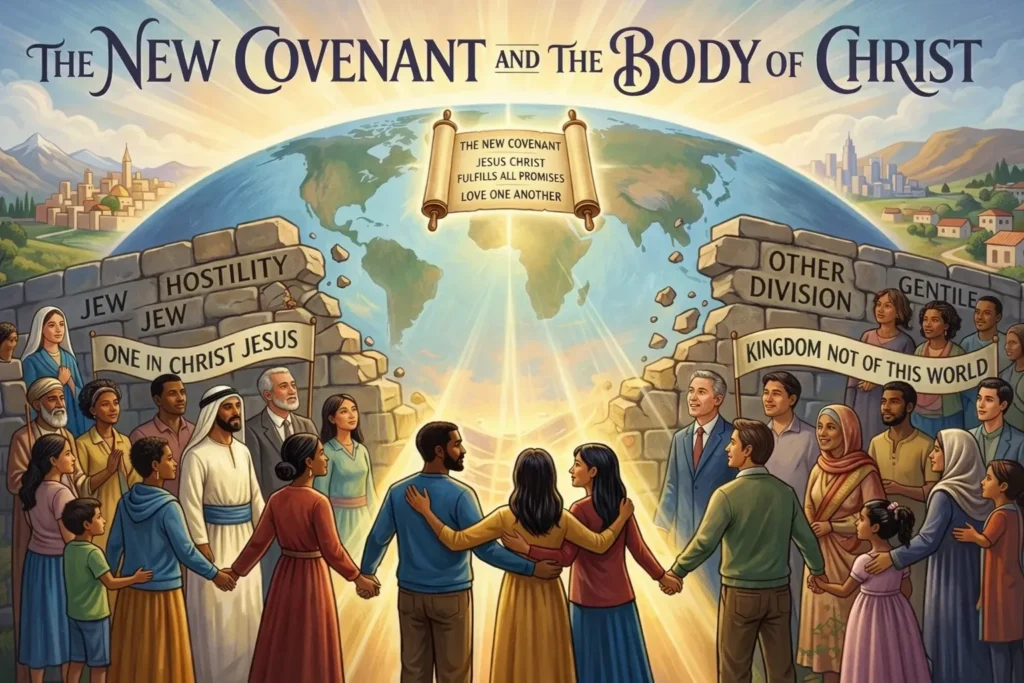
To fully answer the question, “Should Christians support everything Israel does?”, we must look through the lens of the New Covenant. Jesus Christ is the ultimate fulfillment of God’s promises. Through His death and resurrection, the dividing wall of hostility between different ethnic groups has been destroyed.
The Apostle Paul writes in Galatians 3:28: “There is neither Jew nor Gentile… for you are all one in Christ Jesus.”
God’s kingdom is not bound by the political borders of the Middle East. It is a global, spiritual kingdom made up of people from every tribe, tongue, and nation. When we ask, “Should Christians support everything Israel does?”, we must measure our support against the teachings of Jesus. Jesus prioritized the marginalized, preached peace, and called His followers to love their enemies.
Our support for any nation must align with God’s heart for justice, mercy, and salvation. We cannot endorse actions that contradict the Sermon on the Mount simply because the nation taking those actions is named Israel.
How to Respond with Discernment and Compassion
So, how do we move forward? Should Christians support everything Israel does? The biblical answer is no. We should not support everything any nation does. Instead, we must respond with spiritual discernment, biblical wisdom, and profound kingdom love.
Here are practical ways Christians can approach this complex issue:
- Pray for Peace: Pray for the safety and salvation of everyone living in the Middle East. Pray for Israeli citizens and Palestinian citizens alike.
- Seek Justice: Do not turn a blind eye to suffering or injustice, regardless of who is committing it. God holds all nations accountable.
- Study Scripture in Context: Avoid lifting verses out of the Old Testament and applying them directly to modern geopolitics without passing them through the lens of the New Testament and the teachings of Jesus.
- Love the Jewish People: Reject all forms of antisemitism. We owe a great debt of gratitude to the Jewish people, through whom we received the Scriptures and the Messiah.
- Keep the Main Thing the Main Thing: The gospel of Jesus Christ is the ultimate hope for the world, not military alliances, political borders, or earthly governments.
This nuanced approach does not mean we are “against” Israel. We pray for peace, we love the Jewish people, and we honor God’s historical promises. But love demands more than blind loyalty. True biblical love requires discernment and courage. We must be people of the kingdom, rooted in eternal truth rather than earthly political narratives.
Frequently Asked Questions (FAQ)
Should Christians support everything Israel does?
No. Christians are called to evaluate the actions of all nations through the lens of biblical justice and the teachings of Jesus Christ. While believers should love and pray for the Jewish people, unconditional support for the political or military actions of any modern state is not a biblical requirement.
Does criticizing the Israeli government mean I am cursing Israel?
No. Genesis 12:3 refers to the spiritual covenant God made with Abraham. Criticizing the foreign policy, military actions, or domestic policies of the modern secular democracy of Israel is not the same as cursing the biblical patriarchs or the Jewish people.
Are the Jewish people still God’s chosen people?
The Bible teaches that God made an irrevocable covenant with Abraham. However, the New Testament clarifies that true children of Abraham are those who put their faith in Jesus Christ (Galatians 3). God loves the Jewish people deeply and desires for them to come to a saving knowledge of the Messiah.
What does it mean to pray for the peace of Jerusalem?
Praying for the peace of Jerusalem means praying for the true shalom (wholeness, peace, and salvation) of all people living in the region. It involves asking God to end violence, bring about reconciliation, and open hearts to the gospel of Jesus Christ.
Is the modern state of Israel the fulfillment of biblical prophecy?
Christians hold different theological views on this topic. Some (Dispensationalists) believe the 1948 establishment of Israel is a direct fulfillment of prophecy. Others (Covenant Theologians) believe the promises made to ancient Israel are fulfilled spiritually in Jesus Christ and His Church. Regardless of your theological view, no earthly government is exempt from God’s moral standards.