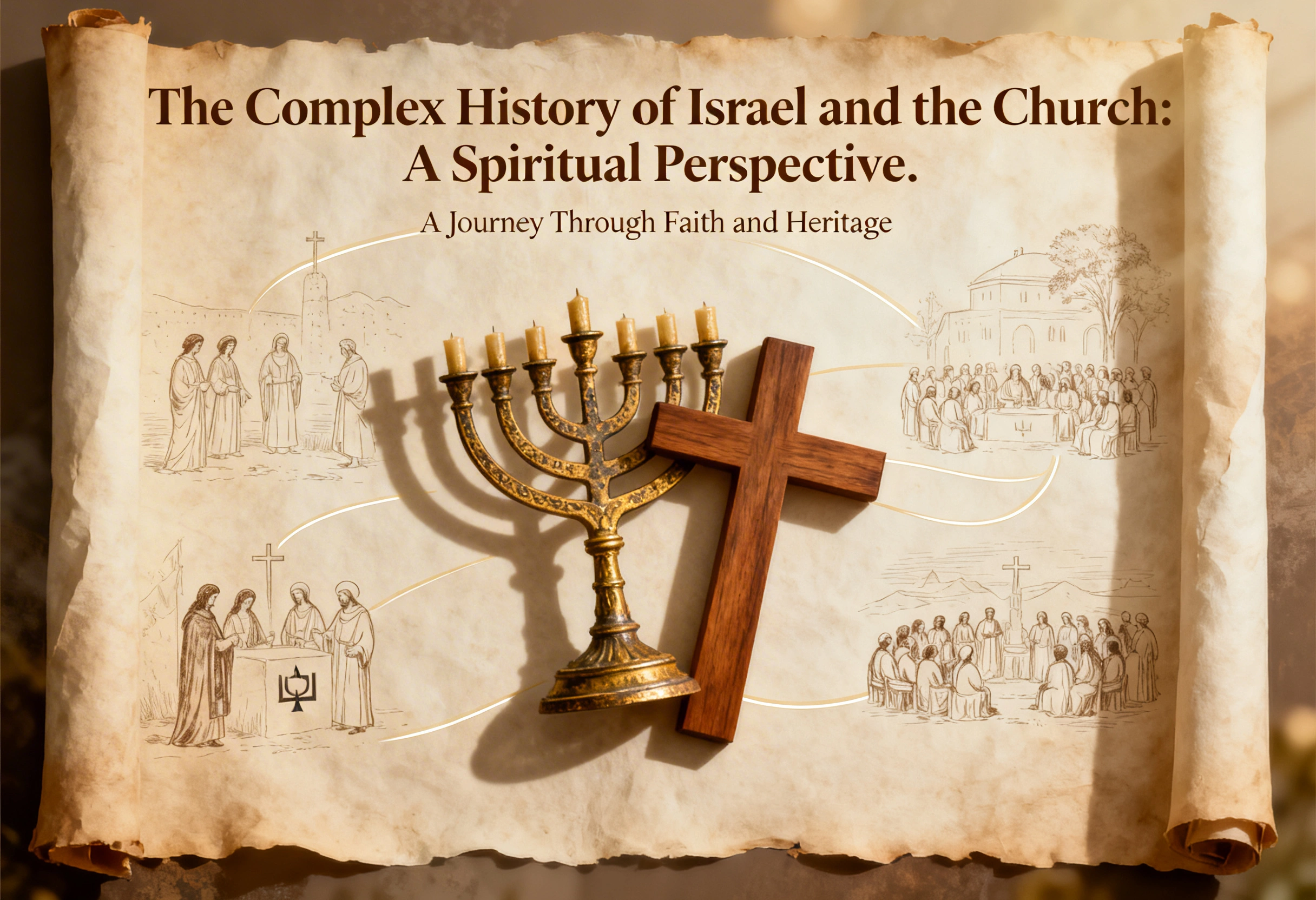
There is a vast amount of discussion today regarding Israel and the Church. Some of this conversation is grounded in biblical truth, while some of it stems from fear dressed up as theology. Coming out of deep spiritual warfare and years of mental torment, one truth becomes clear: not everything loud is true, and not everything quiet is dead. You must view the connection between Israel and the Church with spiritual eyes, rather than just relying on history books or modern headlines.
The relationship between Israel and the Church is a defining theological issue. It shapes how we view biblical prophecy, the Middle East, and the heart of God. This article explores the origins of this relationship, the dangers of Replacement Theology, the impact of Dispensationalism, and how modern believers should navigate this complex dynamic.
By the end of this guide, you will understand the historical roots of the divide and discover how we can move forward with both truth and compassion.
The Biblical Foundations of Israel and the Church
To truly understand the dynamic between Israel and the Church, we have to look long before the geopolitical events of 1948. The story begins with a promise and a profound divide.
God gave Abraham a covenant. This covenant included a promised land, a blessed seed, and a divine destiny. However, Abraham had two sons, and their lives set the stage for thousands of years of conflict and eventual redemption.
Two Sons, One Enduring Story
Abraham’s two sons represent two very different paths:
- Ishmael: Born out of human impatience and an attempt to force God’s timing.
- Isaac: Born from divine promise and miraculous intervention.
Both sons received blessings from God. However, only Isaac carried the specific covenant that would ultimately lead to the Messiah. What many people fail to realize is that the conflict we see today is not merely political. It is deeply spiritual. It represents family history that has gone unresolved. When you ignore family pain, it quickly turns into generational warfare. Ishmael and Isaac never experienced complete healing, and as a result, their descendants continue to bleed.
The connection between Israel and the Church hinges on understanding this original family wound. The Church must recognize that both people groups carry deep historical pain that requires a spiritual solution.
Contrasting the Two Sons
| Son | Origin | Biblical Significance | Generational Impact |
|---|---|---|---|
| Ishmael | Born of Hagar (Impatience) | Blessed by God to be a great nation | Father of the Arab nations |
| Isaac | Born of Sarah (Promise) | Inheritor of the Abrahamic Covenant | Father of the Jewish nation (Israel) |
How Did the Early Church Forget Israel?
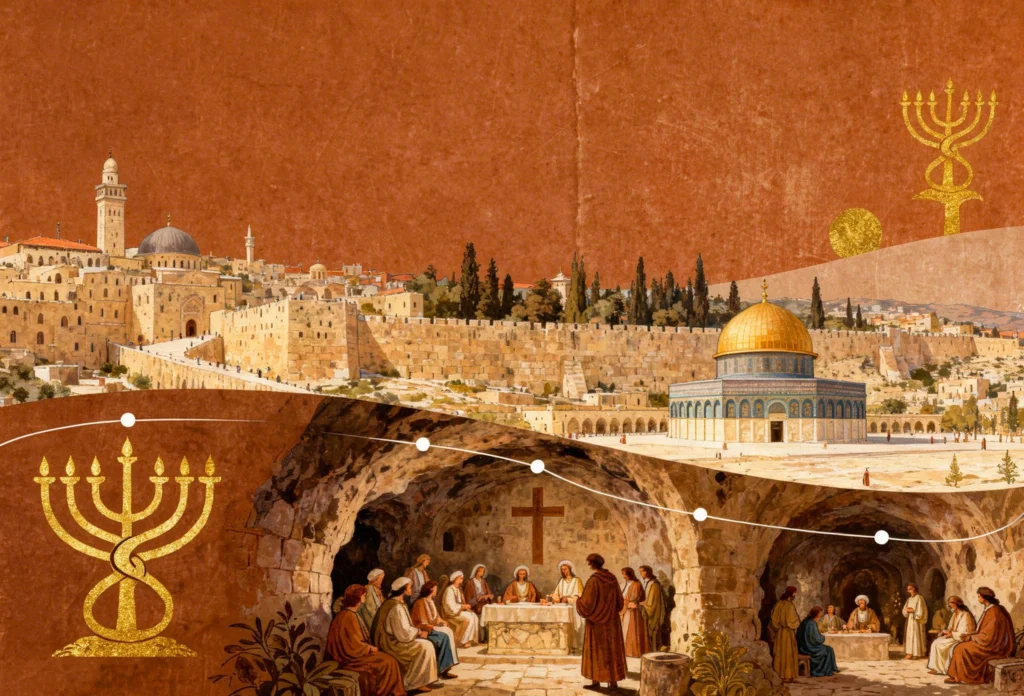
If we look back at the first century, the early Church started out entirely Jewish. Peter, Paul, and the original disciples were Jewish men following a Jewish Messiah. So, how did the relationship between Israel and the Church become so fractured?
By the time Emperor Constantine legalized Christianity in the Roman Empire, a massive shift occurred. The Church gained immense political power but lost its foundational memory. Rome did not just legalize the Christian faith; Rome fundamentally reshaped it.
The Rise of Replacement Theology
As centuries passed, prominent voices within Christianity began to distance themselves from their Jewish roots. This shift gave birth to what we now call Replacement Theology.
Proponents of this view started claiming:
- “We are the new Israel.”
- “God is completely done with the Jewish people.”
- “The Church replaces the original covenant.”
Replacement Theology is not just flawed theology; it is highly dangerous. Whenever we try to take someone else’s biblical promise and claim it exclusively as our own, we rob both them and ourselves of what God genuinely wants to do. The relationship between Israel and the Church should be one of grafting, not replacement. The Church is grafted into the rich root of the olive tree, as the Apostle Paul describes, meaning the original branches still hold massive significance in God’s redemptive plan.
Dispensationalism: When Israel and the Church Reconnected
Fast forward to the 19th century. A dramatic shift in theological thought began to restore the connection between Israel and the Church. A man named John Nelson Darby started preaching a message that was considered radical for his time. His core message was simple: “God is not done with Israel.”
John Nelson Darby and the Prophetic Shift
Darby believed that human history was divided into specific dispensations. These were distinct periods where God dealt with humanity in different ways based on specific covenants.
- The Law: The dispensation focusing on the Mosaic covenant.
- The Church: The current dispensation of grace.
- The Kingdom: A future dispensation where God fulfills His promises to Israel.
This theological framework, known as Dispensationalism, clearly separated the destinies of Israel and the Church, while validating that God still had a profound, unfulfilled plan for the Jewish people.
The Scofield Study Bible and Mainstream Theology
This idea exploded in popularity when the Scofield Study Bible was published in the early 1900s. Suddenly, whole generations of believers started viewing Israel as a critical piece of the end-times puzzle. Later in the 20th century, authors like Hal Lindsey and the creators of the Left Behind series pushed this theology into the mainstream. Churches everywhere began looking at the Middle East through the lens of biblical prophecy.
The relationship between Israel and the Church was officially front and center in modern evangelicalism.
The Modern Problem Between Israel and the Church
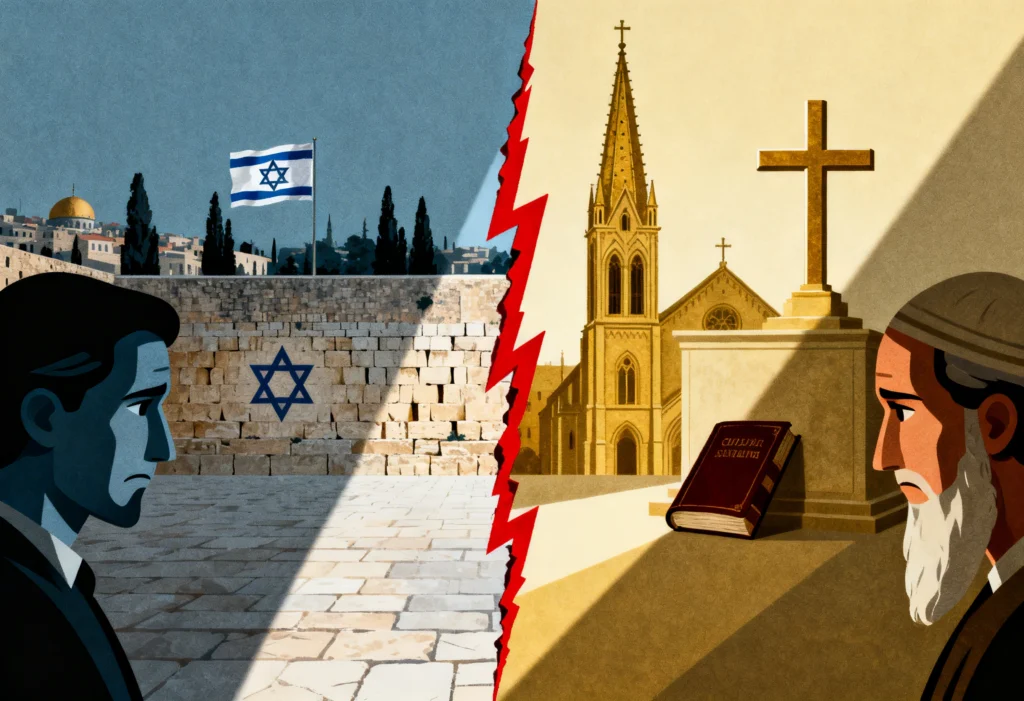
While Dispensationalism successfully woke the modern believer up to the importance of Israel, it also created a new set of problems. In many ways, the relationship between Israel and the Church became highly transactional and entirely focused on the future, rather than the present.
People became obsessed with prophetic timelines rather than eternal truths. Believers grew more focused on the physical rebuilding of the Temple than the spiritual building of the Church. Sadly, many became more excited about wars and rumors of wars in the Middle East than cultivating the peace of Christ in their own hearts.
Prophecy Without Compassion
Prophecy is real, and the nation of Israel matters deeply to the biblical narrative. However, when we study the relationship between Israel and the Church, we must remember a crucial warning: prophecy without compassion becomes incredibly cold. Theology without the Holy Spirit simply becomes rigid law.
When you look at the ongoing conflicts in the Middle East, do not just see politics. See a spiritual wound. Look at the family curse that has never been healed. The Church, some factions asleep, others wide awake, spends too much time arguing over end-times charts while real people continue to bleed.
A New Perspective for Israel and the Church
God is calling modern believers not just to watch Israel as a prophetic clock, but to weep for her. We are called not just to pray for prophecy to unfold, but to actively walk in peace.
It is time to stop choosing sides as if biblical history is a modern sports game. We need a holistic, spiritually mature perspective on Israel and the Church.
Moving Forward with Compassion and Truth
Consider these vital truths as you navigate the relationship between Israel and the Church:
- Israel remains a vital part of God’s overarching plan.
- The Church is graciously grafted into the original covenant.
- Palestinians and Arab nations are people made in the very image of God.
- The Cross of Jesus Christ is big enough to bring redemption to both Ishmael and Isaac.
If you truly believe that Jesus is returning, your life should reflect His character. Pray earnestly for peace. Stand firmly for truth. Never forget that God’s ancient covenants do not cancel out His overwhelming compassion for all humanity. This conflict is deeper than politics; it is generational and deeply spiritual.
The ultimate healing between Israel and the Church will happen when the Church wakes up to the heart of the Father. Until both sons come home, there will be no true rest in the land. But we hold onto the hope that one day soon, peace will reign.
Frequently Asked Questions (FAQ) about Israel and the Church
What is the main difference between Israel and the Church?
Israel historically refers to the physical descendants of Abraham, Isaac, and Jacob, chosen by God to bring forth the law and the Messiah. The Church consists of all believers in Jesus Christ (both Jewish and Gentile) from the Day of Pentecost onward.
What is Replacement Theology?
Replacement Theology (also known as Supersessionism) is the belief that the Christian Church has completely replaced national Israel regarding the promises and covenants detailed in the Bible. This view teaches that God is finished with Israel as a distinct nation.
Why is Dispensationalism important to the relationship between Israel and the Church?
Dispensationalism teaches that God has distinct plans for Israel and the Church. It helped revive the modern Christian belief that God’s promises to the Jewish people regarding the land and future restoration are still valid and separate from the promises given to the Church.
Does God still have a plan for Israel?
Yes. According to Romans 11, God has not rejected His people. The Bible teaches that the gifts and calling of God are irrevocable, meaning the promises made to Israel will ultimately find their fulfillment.
How should the Church view the current conflict in the Middle East?
The Church should view the conflict through a lens of deep spiritual compassion rather than pure politics. Believers are called to pray for the peace of Jerusalem, stand for biblical truth, and recognize that God’s love extends to all people involved, desiring salvation and healing for both the descendants of Isaac and Ishmael.