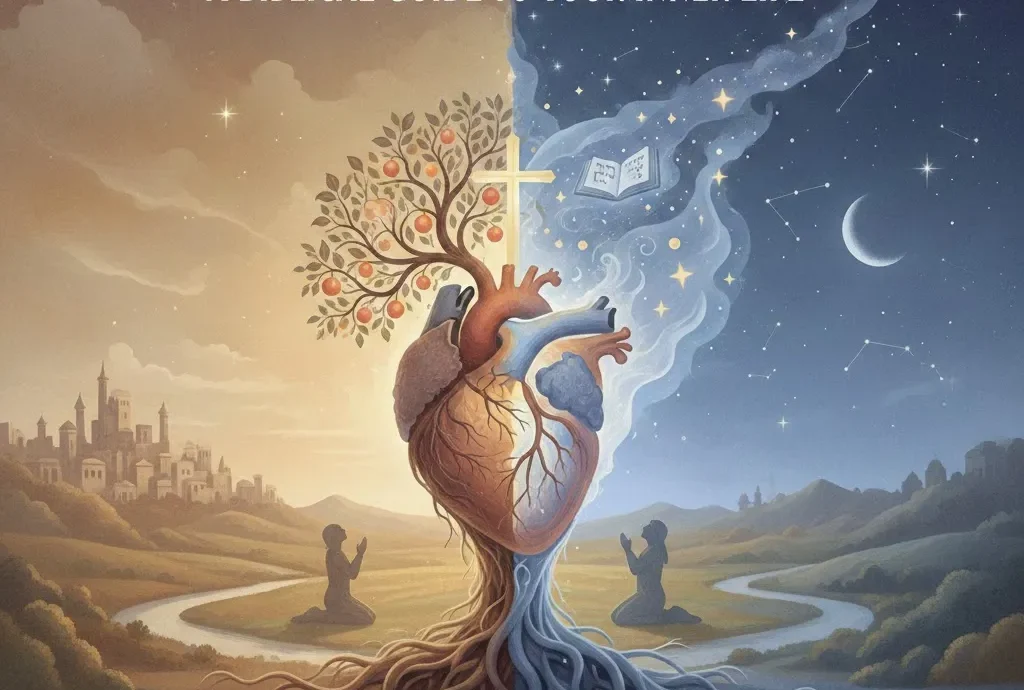
People often wonder about the deep parts of human existence, specifically regarding the heart and soul. When you read the Bible, you see both terms used frequently. At first glance, they might seem like two completely different parts of your spiritual anatomy. However, when you dig deeper into Scripture, you realize that the Bible uses the heart and soul to describe the exact same inner activity. This includes your thoughts, your emotions, and your daily decisions.
Understanding the connection between the heart and soul matters deeply. It impacts how we experience emotional healing, inner transformation, and deliverance. You cannot find healing in a place you do not understand. This comprehensive guide explores the biblical relationship between the heart and soul, showing you how they work together and why understanding them leads to a healthier spiritual life.
The Biblical Connection Between the Heart and Soul
To understand the heart and soul, we must look at how the Bible defines their functions. Many people assume the heart only handles feelings, while the mind handles logic. Scripture paints a very different picture. The heart and soul overlap in three primary areas: thinking, feeling, and choosing.
The Heart Thinks: The Mind Connection
You might associate thinking strictly with the brain. However, the Bible clearly states that reasoning happens deep within us. Proverbs 23:7 tells us that as a person thinks in their heart, so they are.
This verse reveals a massive connection. We typically associate thinking with the mind, which theologians agree forms a major part of the human soul. The heart involves reasoning, processing information, and forming core beliefs. Because the heart processes thoughts just like the soul does, we see the first major bridge between the heart and soul.
The Heart Feels: Emotional Overlap
Emotions play a vital role in our daily lives. Look at how Jesus spoke about inner turmoil in John 14:1, telling His followers not to let their hearts be troubled. Similarly, Psalm 55:4 describes the heart experiencing severe anguish.
Your heart feels intense grief. Your heart experiences deep trouble and overwhelming joy. This is not just poetic or symbolic language; it represents real, tangible emotion. We naturally associate these deep emotions with the soul. If the heart feels exactly the way the soul feels, it becomes clear that the heart and soul function as one combined unit.
The Heart Decides: The Will and Choices
Decision-making happens in the will. The will stands as the third pillar of the human soul, alongside the mind and emotions. Yet, Scripture constantly attributes decision-making to the heart.
- Daniel 1:8: Daniel purposed in his heart not to defile himself.
- Jeremiah 29:13: God promises we will find Him when we search with all our heart.
Determination, setting a course, and making firm choices happen in the heart. Since the heart thinks, feels, and decides exactly like the soul, we can safely view them as deeply intertwined elements of our inner life.
Worship: Where Heart and Soul Meet
Worship brings the heart and soul together beautifully. When you read the Psalms or the Gospels, you see these words used interchangeably to describe the deepest form of praise.
- Luke 1:46–47: Mary declares that her soul magnifies the Lord.
- Psalm 103:1: David commands his soul to bless the Lord.
- Psalm 9:1: David promises to praise the Lord with his whole heart.
These verses describe authentic worship. True worship comes from your deepest inner place. Sometimes biblical authors call this place the heart, and other times they call it the soul. The fact that writers swap these words so easily proves the unbreakable bond between the heart and soul.
The Theological View: Spirit, Heart, and Soul
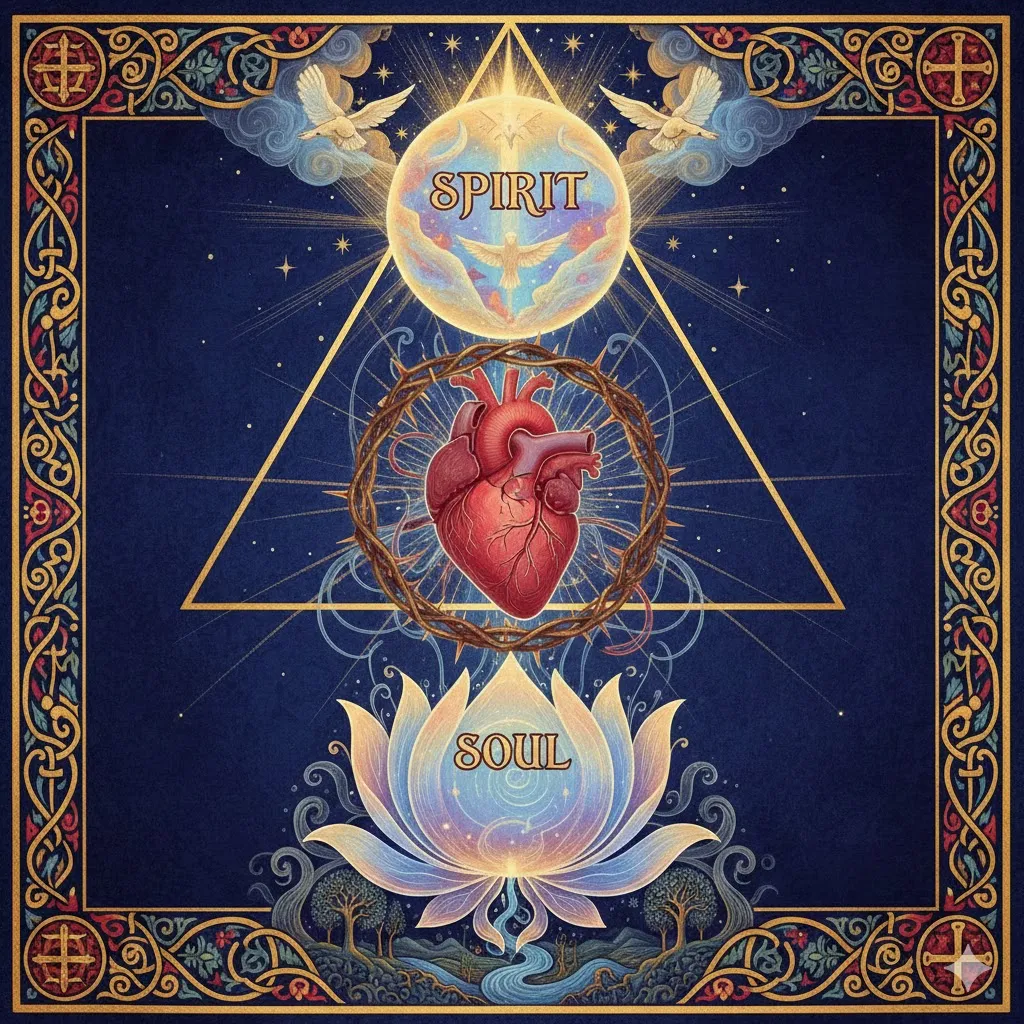
To fully grasp the heart and soul, we need to look at human anatomy from a biblical perspective. First Thessalonians 5:23 explains that you are a spirit, you have a soul, and you live in a body.
The Sealed Spirit vs. The Open Soul
When a person becomes a Christian, their spirit undergoes a complete renewal. Ephesians 1:13 explains that believers receive a seal of the promised Holy Spirit. Your spirit, the eternal part of you, becomes fully redeemed and protected. The enemy cannot touch or possess your renewed spirit.
However, the soul operates differently. The soul does not receive an impenetrable seal. The heart, the center of your emotions, thoughts, and will, remains vulnerable to damage, wounds, and spiritual attacks. This explains why Scripture constantly commands us to protect our inner life.
- Romans 12:2 tells us to renew our minds.
- Proverbs 4:23 warns us to guard our hearts.
- Psalm 23:3 celebrates God restoring our souls.
People often say, “Jesus lives in my heart!” Ephesians 3:17 confirms that Christ dwells in our hearts through faith. But just because Jesus resides there does not mean other negative influences cannot attempt to enter. When we open the door to bitterness, fear, rebellion, or lies, we give spiritual access to the enemy. This involves influence, not possession. It affects the areas of our heart and soul that we have not fully surrendered to God.
Comparing the Spirit, Soul, and Heart
To simplify these concepts, review the table below outlining how the spirit, soul, and heart function.
| Spiritual Component | Biblical Function | Current State in Believers | Need for Healing |
|---|---|---|---|
| Spirit | Connects with God, eternal life | Sealed by the Holy Spirit, made new | Completely whole, needs no healing |
| Soul | Mind, Will, Emotions | Undergoing transformation (Sanctification) | Needs constant renewal and restoration |
| Heart | The core or seat of the soul | The access point for faith and choices | Needs guarding, healing from trauma |
Why the Heart and Soul Connection Matters for Healing
Understanding the heart and soul holds massive implications for spiritual and emotional healing. When Christians talk about healing from past trauma or seeking deliverance, confusion often arises. Many ask, “I have the Holy Spirit. How can something be wrong inside of me?”
The truth lies in the separation of the spirit and the soul. When you accepted salvation, God made your spirit entirely new. But your soul, and by extension, your heart, remains in a lifelong process of transformation. Your heart can still carry wounds from the past. A Christian can still need deliverance from negative spiritual influences.
You can carry the Holy Spirit in your spirit while simultaneously carrying trauma, lies, or spiritual baggage in your soul. This reality does not contradict the Bible; it aligns perfectly with it. Acknowledging this truth allows true healing to begin.
Inner Transformation and Deliverance
To experience complete freedom, you must address the wounds in your heart and soul.
- Acknowledge the pain: You cannot heal what you refuse to reveal. Admit where your heart feels broken.
- Surrender your will: Give your decision-making power back to God.
- Renew your mind: Replace the enemy’s lies with biblical truths.
- Seek deliverance: Ask the Holy Spirit to cleanse any area of your soul influenced by darkness.
Summary: Are the Heart and Soul Interchangeable?
After studying the Scriptures and observing spiritual growth, we can draw a solid conclusion. While the heart and soul might carry slight nuances depending on the specific verse, they overlap so heavily that we can view them as essentially the same functioning unit.
The heart acts as the seat of the soul. It houses your thoughts, your emotions, and your decisions. It represents the part of you that God actively wants to heal, renew, and fill with His glorious presence.
If your heart sustains a wound, your soul feels the impact. James 1:8 warns that a double-minded heart makes the entire soul unstable. If you require healing in your heart, you absolutely need healing in your soul.
We must move past arguing over semantics and focus on the real goal: surrendering our entire inner being to Jesus. Whether you refer to it as your heart or your soul, the objective remains identical. God desires for you to live a life that is fully healed, entirely surrendered, and abundantly alive.
If you need soul healing, ask God to search your heart today. If you need deliverance, invite the Holy Spirit to invade your deepest, most hidden places. God never turns away from your wounds. He stepped into humanity specifically to heal them.
Frequently Asked Questions (FAQ)
What is the main difference between the spirit and the soul?
Your spirit is the part of you that connects directly with God. When you become a believer, the Holy Spirit seals your spirit, making it entirely new. Your soul consists of your mind, will, and emotions. The soul connects you to the human experience and requires ongoing renewal and healing throughout your life.
Are the heart and soul exactly the same thing?
While theologians sometimes distinguish them slightly, the Bible uses the heart and soul interchangeably in most contexts. The heart acts as the core or “seat” of the soul, processing thoughts, feeling emotions, and making decisions.
Can a Christian have demons in their soul?
Christians cannot be “possessed” by demons because the Holy Spirit seals their spirit. However, a Christian can experience demonic influence or oppression in their soul or heart if they leave doors open through unrepentant sin, bitterness, or severe trauma. This is why guarding the heart is essential.
How do I heal a wounded heart and soul?
Healing begins with surrendering your pain to God. You must actively renew your mind with Scripture, forgive those who hurt you to close doors to the enemy, and invite the Holy Spirit into your broken places. Seeking counsel from mature believers or Christian therapists also helps facilitate soul healing.
Why does the Bible tell us to guard our hearts?
Proverbs 4:23 says to guard your heart because everything you do flows from it. Your heart and soul dictate your thoughts, feelings, and actions. If you allow toxic influences, lies, or bitterness into your heart, it will negatively affect your entire life and spiritual walk.