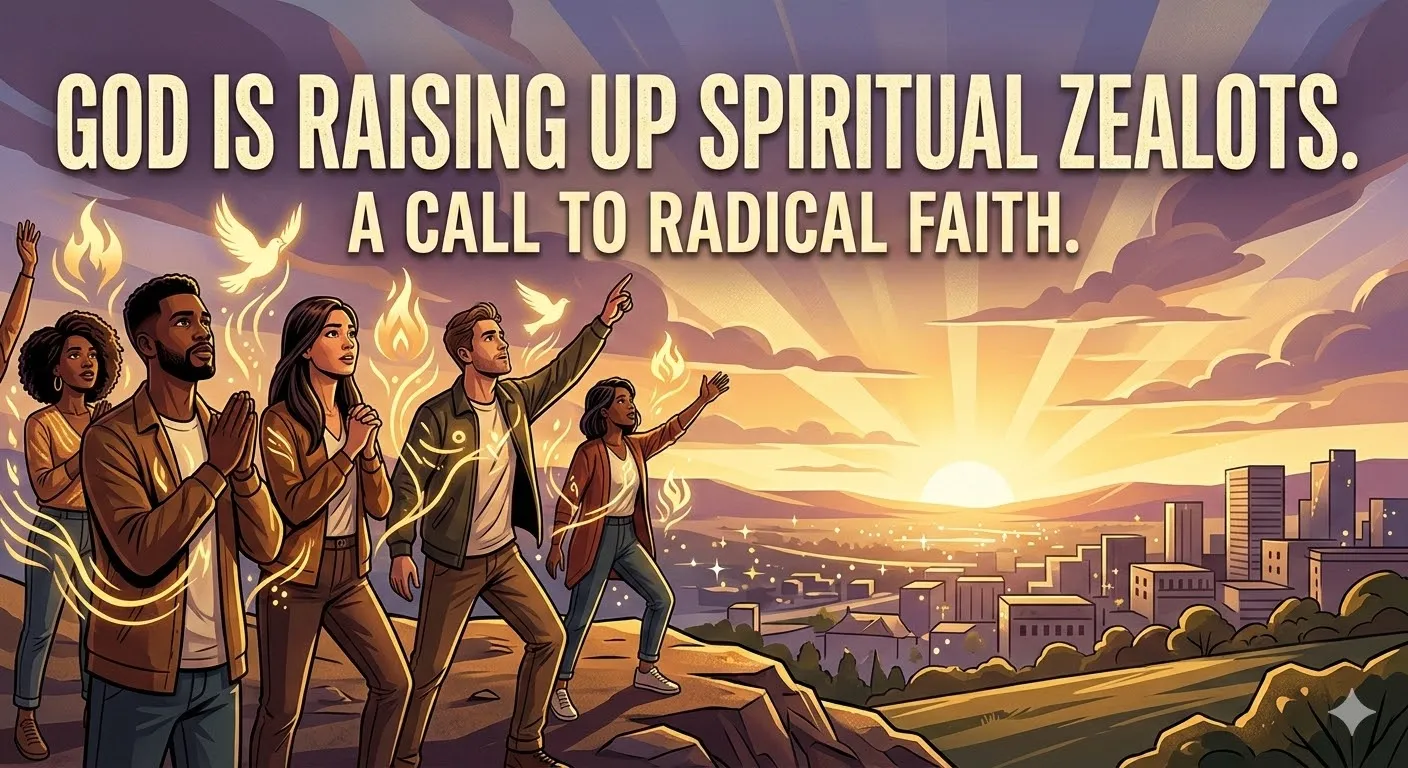
In an age of comfortable, convenient Christianity, a powerful shift is underway. A stirring in the hearts of believers is calling them away from passive faith and into a dynamic, fervent relationship with God. This is the rise of the spiritual zealots, a generation defined not by extremism, but by an unwavering, wholehearted devotion to Jesus Christ. They are the answer to the lukewarm church described in Revelation 3:16, where Jesus warns, “So because you are lukewarm, neither hot nor cold, I am about to spit you out of my mouth.”
This divine discontent is birthing a movement of believers who refuse to settle for a faith that is merely a Sunday routine. They seek a transformative encounter with the living God, one that sets their hearts ablaze with holy fire. These emerging spiritual zealots understand that a casual connection to the Creator is insufficient. They are driven by a hunger for more, more of His presence, more of His power, and more of His purpose for their lives. This article explores the biblical foundation, historical context, and modern expression of this passionate, all-in faith.
Understanding the Call: What Are Spiritual Zealots?
The term “zealot” can carry negative connotations, often associated with fanaticism or irrational militancy. However, when we explore its biblical roots, a different picture emerges. The call to be spiritual zealots is not a call to aggression, but to a profound and passionate love for God that fuels every aspect of life. It’s about channeling a radical commitment toward divine purposes.
At its core, a spiritual zealot is a believer whose faith is marked by intense fervor, dedication, and an uncompromising commitment to living out the Gospel. They are not content with simply knowing about God; they are desperate to know Him personally and intimately.
The Biblical Rebuke of Lukewarm Faith
The most direct call away from spiritual apathy comes from Jesus Himself in His message to the church in Laodicea.
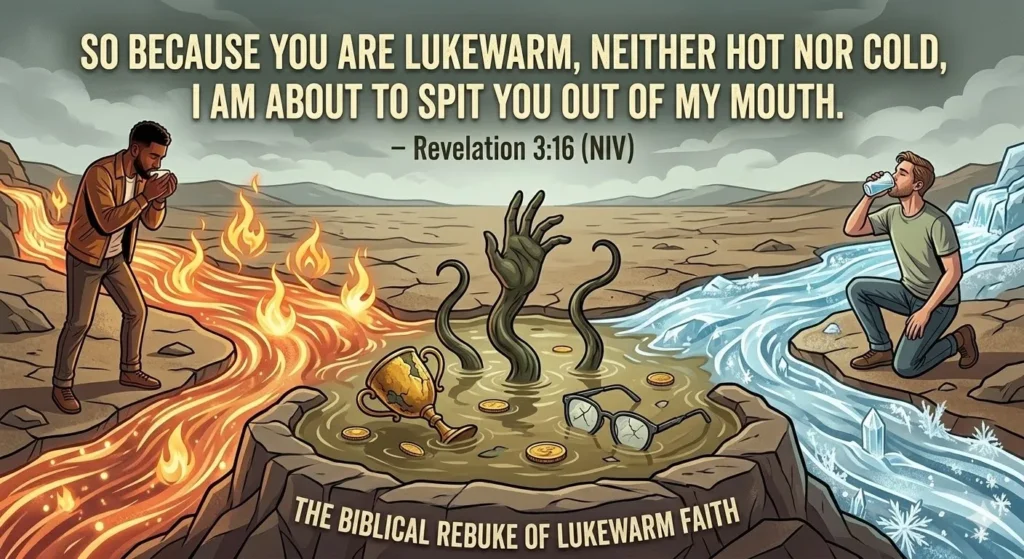
“I know your deeds, that you are neither cold nor hot. I wish you were either one or the other! So because you are lukewarm, neither hot nor cold, I am about to spit you out of my mouth.” – Revelation 3:15-16 (NIV)
This imagery is stark and unsettling. The word for “spit” in the original Greek (emeō) means to vomit. It conveys a sense of deep repulsion. Why such a strong reaction?
- Hot faith is passionate, effective, and useful. It brings warmth and healing.
- Cold faith, in the context of a hot climate, could be refreshing and purposeful, like a cool drink.
- Lukewarm faith is stagnant, useless, and nauseating. It represents a state of compromise, self-sufficiency, and spiritual indifference.
The Laodicean church was wealthy and believed it needed nothing, yet Jesus saw it as “wretched, pitiful, poor, blind and naked” (Revelation 3:17). This is the danger of a faith that has lost its fire. God is calling for a people who are wholly His, and the rise of spiritual zealots is a direct response to this divine summons.
Historical Zealots: From Political Fire to Spiritual Passion
To fully grasp the concept, we must look at the original Zealots in the first century. They were a Jewish political movement that fiercely opposed the Roman occupation of Israel, driven by a zealous commitment to God’s law and national sovereignty. Their passion was undeniable, even if their methods were often violent. One of Jesus’ own disciples, Simon the Zealot (Luke 6:15), was identified with this group, suggesting a personality of intense loyalty and conviction.
However, the New Testament redefines and sanctifies this zeal. The Apostle Paul, once a “zealot” for the traditions of Judaism who persecuted the church (Galatians 1:14), redirected his immense passion after his encounter with Christ. His zeal was transformed from a legalistic fire into a burning passion for the Gospel. He later wrote that Jesus gave Himself for us to purify a people “zealous for good works” (Titus 2:14).
This transformation is key. The modern spiritual zealots are not political radicals; they are Spirit-filled believers whose passion is channeled into:
- Loving God: Pursuing Him with their entire being.
- Loving People: Serving others and sharing the hope of the Gospel.
- Advancing the Kingdom: Living for a purpose greater than personal comfort or success.
The Marks of Modern Spiritual Zealots

How does this radical faith manifest in the 21st century? Modern spiritual zealots are not defined by a specific denomination or style of worship. They are recognized by the fruit of a life fully surrendered to God. Their passion is not manufactured hype; it is the natural overflow of a genuine relationship with Jesus Christ.
1. A Life Anchored in Prayer and the Word
The foundation of a zealous faith is a deep, personal connection with God. This is not a formal or religious duty but a relational necessity.
- Prayer is a Lifeline: For spiritual zealots, prayer is not a last resort; it is their first response. They live on their knees, interceding for their families, communities, and the lost. They understand that prayer is where battles are won and where they receive strength, guidance, and intimacy with the Father. It is a two-way conversation, not a monologue of requests.
- The Word is their Authority: They have a voracious appetite for Scripture. The Bible is not just a book of stories or rules; it is the living, active Word of God. They study it diligently, meditate on its truths, and allow it to shape their worldview and actions. As Hebrews 4:12 states, the Word of God is “alive and active, sharper than any double-edged sword.”
2. An Uncompromising Pursuit of Purity
In a world that glorifies compromise, spiritual zealots stand apart. They are committed to a life of holiness, not out of legalistic fear, but out of a deep love for God.
- Dying to Self: They embrace the call to “take up their cross daily” (Luke 9:23). This means crucifying their selfish desires, sinful habits, and worldly ambitions to live a life that honors Christ.
- Walking in the Light: They are quick to repent and seek forgiveness. They understand that purity is not about achieving sinless perfection but about maintaining a transparent and honest relationship with God, as described in 1 John 1:7.
3. A Passion for the Lost
A heart on fire for God inevitably breaks for the things that break His heart. Spiritual zealots are filled with a sense of urgency for the salvation of others.
- Evangelism as a Lifestyle: Sharing the Gospel is not an event they attend; it is a natural overflow of their love for Jesus. They look for opportunities in their daily lives to share the hope that is within them.
- Compassion in Action: Their zeal is expressed through tangible acts of love and service. They are the hands and feet of Jesus to a hurting world, caring for the poor, the marginalized, and the broken. This aligns with the “good works” Titus 2:14 speaks of.
4. A Relentless Race, Not a Casual Stroll
Many well-meaning Christians advise new believers to “pace themselves,” warning that faith is a “marathon, not a sprint.” While the intention is to prevent burnout, this mindset can inadvertently encourage passivity. The spiritual zealots understand the biblical metaphor differently.
The Apostle Paul frames it as a race to be won:
“Do you not know that in a race all the runners run, but only one gets the prize? Run in such a way as to win the prize.” – 1 Corinthians 9:24 (NIV)
This language doesn’t suggest a leisurely jog. It implies effort, discipline, and a relentless forward momentum. It’s not about burning out from fleshly effort, but about being continually fueled by the Holy Spirit. A fire that is truly from God doesn’t exhaust you; it sustains you. The goal is not to just finish the race but to run with everything you have for the “upward call of God in Christ Jesus” (Philippians 3:14).
| Misconception | Biblical Reality |
|---|---|
| “It’s a marathon, so pace yourself.” | “It’s a race, so run to win.” |
| Focus on self-preservation and avoiding burnout. | Focus on being empowered by the Holy Spirit for maximum impact. |
| Can lead to passivity and spiritual coasting. | Drives urgency, discipline, and a desire for excellence. |
| Views spiritual fire as a temporary phase. | Views spiritual fire as the normal state of a Spirit-filled believer. |
Discerning Holy Fire from Empty Hype

A key challenge is distinguishing between genuine spiritual passion and counterfeit emotionalism. The enemy loves to mimic the work of the Holy Spirit to create confusion and discredit authentic moves of God. However, those who walk closely with Jesus develop discernment.
Emotionalism vs. Holy Fire
- Source: Emotionalism is manufactured by human effort (hype, music, peer pressure). Holy fire is a sovereign gift from the Holy Spirit.
- Focus: Emotionalism often focuses on the self, the experience, the feeling. Holy fire always glorifies Jesus Christ.
- Fruit: Emotionalism is fleeting and produces little to no lasting change. Holy fire leads to deep repentance, a transformed life, and lasting fruit of the Spirit (love, joy, peace, etc.).
When the presence of God truly fills a room, the response is authentic. It may be loud praise, joyful dancing, reverent silence, or repentant weeping. The spiritual zealots are not moved by the style of worship but by the presence of the one being worshiped. They can spot the difference between a performance designed to stir up feelings and a genuine encounter with the living God.
For more on the person and work of the Holy Spirit, resources like The Gospel Coalition provide deep theological insights.
Answering the Call: How to Become a Spiritual Zealot
The call to be a spiritual zealot is for every believer. It is not reserved for a select few “super-Christians.” It is the inheritance of all who are in Christ. If your faith has grown lukewarm, there is hope and grace to be set ablaze once more.
- Acknowledge Your State: The first step is honesty. Just as Jesus counseled the Laodicean church, you must first recognize your spiritual condition. Acknowledge any apathy, compromise, or indifference in your heart without shame, but with a sincere desire for change.
- Repent and Return: Repentance is not just feeling sorry; it is a decisive turn back to God. Turn away from the things that have cooled your love for Him, whether it’s worldly distractions, unconfessed sin, or simple neglect.
- Ask for the Fire: Jesus promised, “Ask and it will be given to you” (Matthew 7:7). Make a direct and desperate plea to God: “Set my heart on fire for you.” Ask the Holy Spirit to fill you afresh, to rekindle your first love, and to give you a burning passion for His name.
- Remove the Fuel for Lukewarmness: Identify what habits or mindsets are contributing to spiritual apathy. This could be excessive entertainment, negative relationships, or a prayerless, unexamined life. Be intentional about starving your flesh and feeding your spirit.
- Embrace the Cost: A zealous faith is not a comfortable faith. It will cost you your time, your comfort, your reputation, and your self-centered ambitions. Carrying the cross is incompatible with a casual lifestyle. Resurrection power is only found on the other side of death to self.
Frequently Asked Questions (FAQ) About Spiritual Zealots
Q1: Isn’t being a “zealot” dangerous and extreme?
A: The term is being reclaimed to describe spiritual passion, not religious extremism. A biblical spiritual zealot is zealous for love, good works, and the glory of God, not for violence or hatred. Their passion is governed by the fruit of the Spirit, including love, peace, and self-control.
Q2: How do I avoid burnout if I’m “on fire” all the time?
A: Spiritual burnout often comes from striving in our own strength. True spiritual zeal is sustained by the Holy Spirit, not human effort. It’s about learning to rest in God’s presence while working from that place of intimacy and empowerment. A key is abiding in Christ (John 15), who is the source of all strength and fruitfulness.
Q3: Can someone be quiet and still be a spiritual zealot?
A: Absolutely. Zeal is a matter of the heart, not personality. A quiet, contemplative person can be just as on fire for God as an expressive, charismatic person. Their zeal might manifest through deep intercession, faithful service, profound wisdom, or steadfast obedience rather than loud demonstration.
Q4: What if my church feels lukewarm?
A: First, be the change you want to see. Let your personal fire for God be a light. Pray for your pastor and your fellow believers. Start a small prayer group. Serve faithfully where you are. Sometimes, one lit candle can set a whole room ablaze. If the environment is persistently toxic to your faith, pray for wisdom about whether God is calling you to be a catalyst for revival there or to find a new community.
Q5: Is it wrong to desire a comfortable and peaceful life?
A: There is nothing wrong with peace; in fact, it’s a fruit of the Spirit. The issue is when comfort becomes an idol that we protect at the expense of our obedience to God. The call of Christ is one of radical discipleship, which often leads us out of our comfort zones. True, lasting peace is found not in comfortable circumstances, but in the center of God’s will.
Conclusion: The Time for Lukewarm Faith is Over
The world is not waiting for a more polite, diluted, or socially acceptable version of Christianity. It is groaning for an authentic encounter with the power and love of Jesus Christ, a power that is carried by His devoted followers. God is raising up spiritual zealots who are done playing church. They are a generation willing to trade comfort for the cross, popularity for His presence, and a passive faith for a holy fire.
They do not burn out; they burn up, consumed by the love of God.
They are not reckless; they are relentless in their pursuit of Him.
They do not fit in; they are set apart for His glory.
Jesus is not returning for a sleepy, apathetic bride. He is coming for a radiant, passionate, and prepared one. The call has been issued. The invitation is open. You were not made to be tame, to blend in, or to sit still.
You were made to burn.