
The words spoken by Jesus in Matthew 7:22-23 can send a chill down the spine of even the most devoted follower:
“Many will say to Me on that day, ‘Lord, Lord, did we not prophesy in Your name, cast out demons in Your name, and do many mighty works in Your name?’ And then I will declare to them, ‘I never knew you; depart from Me, you workers of lawlessness.’”
For many, this passage is a source of anxiety. It raises questions about security, salvation, and the nature of our relationship with God. We read about people who performed miracles and operated in significant spiritual power, yet were ultimately turned away. This leads to a troubling thought: if they can be rejected, what hope is there for me?
This article proposes a different perspective. What if this passage isn’t meant to inspire fear, but to invite us into a deeper reality? This is a discussion about Matthew 7 union not fear. We will explore how these verses are not a condemnation of spiritual works but a profound call to a life of intimate union with God. It’s a call to move beyond mere activity for God and into a life of friendship and partnership with Him.
We will unpack the crucial difference between knowing about God and truly knowing Him, the role of friendship with the Holy Spirit, and how spiritual gifts are meant to lead us into deeper character and surrender. This is not about earning salvation through works, but about understanding the heart of a God who desires relationship above all else.
The Core Misunderstanding: Activity vs. Intimacy
The group Jesus addresses in Matthew 7 is unsettling because they seem so familiar. They are not outsiders or opponents of the faith; they are insiders who are actively engaged in spiritual work.
- They called Jesus “Lord.”
- They prophesied in His name.
- They cast out demons.
- They performed many mighty works.
Jesus does not dispute their claims. He doesn’t say, “You didn’t really do those things.” The miracles were real. The power was evident. The issue was not the what, but the who. His response is one of the most sobering in Scripture: “I never knew you.”
To our modern ears, “to know” someone means to be aware of them. But in its original biblical context, particularly in covenantal language, “to know” implies a deep, personal, and intimate union. It’s the same word used to describe the most intimate bond between a husband and wife.
Therefore, Jesus’ declaration is not about a lack of awareness. It’s about a lack of relationship. He is saying, “We never shared a life. We were not in union. Your work for me became a substitute for a walk with me.” This reveals the central theme of Matthew 7 union not fear: God values relationship over religious performance.
What Does “Workers of Lawlessness” Truly Mean?
When Jesus calls them “workers of lawlessness,” He isn’t necessarily accusing them of breaking the Ten Commandments. The Greek word for lawlessness, anomia, points to living as if there is no law, specifically, living outside of His will and His ways. It describes a state of self-governance.
They operated with spiritual power but on their own terms. They wanted the authority of the Kingdom without submitting to the King. They enjoyed the gifts of God without surrendering to the God of the gifts. This is the essence of lawlessness in this context: power without intimacy, results without relationship, and works without surrender. It underscores the vital importance of seeing Matthew 7 union not fear as the primary message.
The Bride and the Spirit: A Model for True Union
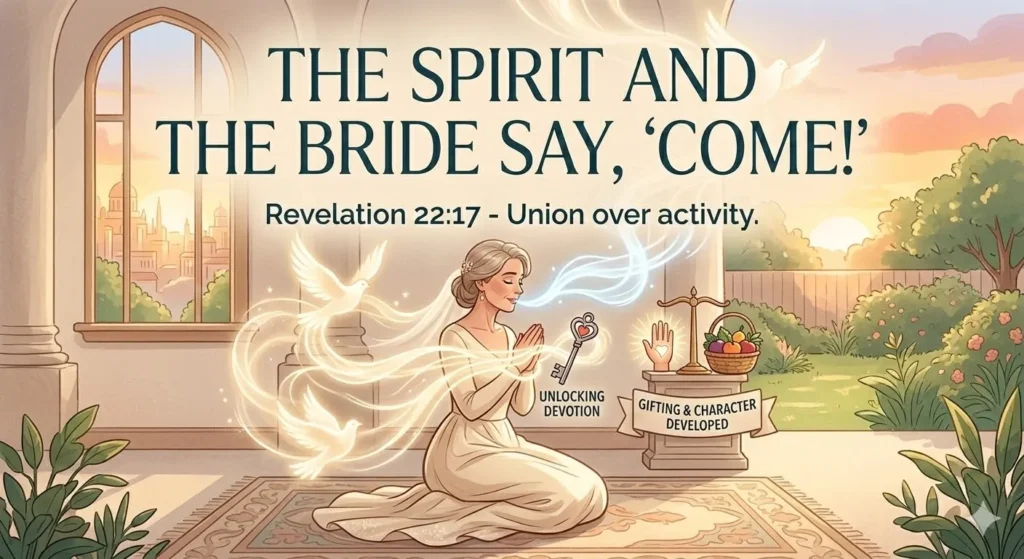
Scripture offers a powerful metaphor for the relationship God desires with His people: the Bride of Christ. The Bride is defined not by her productivity but by her devotion and intimacy with the Bridegroom. She doesn’t just work for Him; she belongs to Him.
This perspective transforms how we approach our faith. A bride might be talented, capable, and achieve great things, but her primary identity is found in her union with her husband. The ultimate question at the end of the age is not “What did you accomplish?” but “Did we walk together?”
This is where the concept of the Bride and the Spirit becomes so critical. Revelation 22:17 says, “The Spirit and the Bride say, ‘Come!'” Notice they speak together. The Bride does not have a voice apart from the Spirit, and the Spirit chooses to partner with the Bride to extend God’s invitation to the world.
This partnership illustrates the life we are called to:
- A life of bridal devotion combined with spiritual friendship.
- A life where gifting and character are developed in tandem.
- A life marked by both calling and complete surrender.
The warning in Matthew 7 is a caution against trying to be a spiritual powerhouse while neglecting to be the Bride. It’s a warning against substituting activity for adoration. The heart of the matter is Matthew 7 union not fear.
Friendship with the Holy Spirit: Your Safeguard Against Performance
If the goal is union, how do we achieve it? Jesus provides the answer in John 15, where he transitions from calling his disciples “servants” to calling them “friends.”
- “Apart from Me you can do nothing.” (John 15:5)
- “I no longer call you servants… I have called you friends.” (John 15:15)
A servant knows their master’s commands, but a friend knows their master’s heart. A servant performs duties, but a friend shares life. This shift is made possible through the person of the Holy Spirit. Cultivating a deep friendship with the Holy Spirit is the ultimate safeguard against falling into the trap of performance-based religion.
The Holy Spirit’s role is not just to empower us for service, but to connect us to the heart of the Father and the Son. Without a conscious, daily relationship with the Spirit, we inevitably drift toward performance. We begin to measure our worth by our spiritual output. With Him, we are constantly realigned to love, reminded that our primary identity is that of a beloved child, not just a worker.
The Practical Work of the Holy Spirit
A genuine friendship with the Holy Spirit provides practical, life-saving guardrails for our journey of faith.
| Function of the Holy Spirit | How It Protects from Performance |
|---|---|
| Conviction | The Spirit convicts us of sin and misaligned motives before our actions lead to a major collapse. He gently corrects our course, keeping us tethered to humility. |
| Slowing Us Down | When our spiritual gifts begin to accelerate and open doors for us, the Spirit is the one who applies the brakes, reminding us that character must keep pace with calling. |
| Teaching Obedience | He teaches us to obey out of love and trust, not out of fear of punishment or a desire for reward. This transforms obedience from a burden into a joyful response to love. |
| Facilitating Abiding | The Spirit makes the command to “abide in Christ” a tangible reality. He is the very presence of God within us, enabling a constant state of communion. |
The Holy Spirit does not empower us to build our own platforms. He empowers us to remain, to stay connected to the Vine, to live in a state of surrendered union. This is the core of understanding Matthew 7 union not fear.
The Irrevocable Nature of Gifts: A Sign of God’s Tender Heart
One of the most perplexing aspects of this discussion is how God can allow gifted individuals to operate in power even when their character is flawed. The answer lies in Romans 11:29: “For the gifts and the calling of God are irrevocable.”
God does not retract His gifts when we make mistakes. He doesn’t take back a calling because our maturity is still a work in progress. This isn’t a sign of carelessness on God’s part; it’s a profound revelation of His loving and patient heart.
Think of a loving father who is so excited about a gift for his child that he can’t wait until Christmas morning. He gives it early, not to spoil the child, but because his delight and love simply overflow. In the same way, God sometimes entrusts us with gifts, influence, or a calling before we seem ready. He does this out of His abundant goodness.
However, a gift given early requires formation later. The presence of a spiritual gift is an invitation into a deeper process of character development. The tragedy of Matthew 7 is not that God gave them gifts prematurely. The tragedy is that they embraced the gifts but refused the process of intimacy, humility, and surrender that was meant to follow. They loved the power but neglected the Person who gave it. This is why focusing on Matthew 7 union not fear is so liberating; it reframes the narrative from one of divine rejection to one of human resistance to intimacy.
Living in the “Both/And”: The Integrated Christian Life

The Christian life presented in the Bible is not a series of “either/or” choices but a beautiful integration of “both/and.” We are called to embrace both sides of the coin.
- Intimacy AND Obedience: True obedience flows from a heart of intimacy. We obey not to earn love, but because we are loved.
- Bridal Devotion AND Spiritual Friendship: We are the Bride, devoted to Christ, and we are friends of the Spirit, walking in partnership with Him.
- Gifting AND Character: Our gifts are meant to be a platform upon which God builds our character. Power without integrity is dangerous.
- Calling AND Surrender: A divine calling must be met with daily surrender to the Lord’s will and timing.
This integrated life is what protects us from the error described in Matthew 7. The individuals in that passage chose a path of “either/or.” They chose power without intimacy, results without relationship, and works without surrender. The invitation from Jesus is to a holistic life where what we do for Him is a natural overflow of who we are in Him. The message of Matthew 7 union not fear is an invitation to this integrated, wholehearted existence.
A Prayer for True Union
If this message resonates with you, perhaps the best response is a simple prayer of alignment. This is not a magic formula, but a posture of the heart that says “yes” to God’s primary desire for you.
Father,
Thank you for every gift, calling, and opportunity you have placed in my life. I recognize them as expressions of your grace.
But more than any gift, I ask for intimacy with you. More than a powerful ministry, I desire a pure heart. More than a significant calling, I long for Christ-like character.
Teach me to walk in deep friendship with Your Holy Spirit. Help me to hear His voice, to yield to His conviction, and to trust His guidance. Protect me from the temptation to build my own kingdom with your tools.
I surrender my works, my gifts, and my future to you. I choose union over activity. I choose relationship over results. Form me into a person who can carry your power without losing your heart.
Amen.
Frequently Asked Questions (FAQ)
Q1: Is Jesus saying that doing good works or having spiritual gifts is bad?
Not at all. Jesus is not condemning good works or spiritual gifts. He is warning against a life where these things become a substitute for a genuine, intimate relationship with Him. The problem isn’t the works; it’s the heart behind them. The core message is that our works should flow from our union with Him, not be a replacement for it.
Q2: How can I know if I’m operating out of performance instead of union?
This requires self-reflection and honesty. Ask yourself these questions: Do I feel closer to God when I’m busy “doing things for Him”? Is my sense of spiritual well-being tied to my performance? Am I resistant to times of stillness and simply “being” with God? Do I fear losing my value if I’m not productive? Answering “yes” to these may indicate a drift toward performance. A key indicator of union is a sense of peace and identity that exists even in seasons of quietness.
Q3: What are practical steps to cultivate friendship with the Holy Spirit?
Cultivating this friendship is intentional. Start by acknowledging Him as a person, not just a force. Talk to Him throughout your day. Practice listening in moments of quiet. When you read the Bible, ask Him for revelation. Most importantly, practice obedience to His gentle nudges and convictions. This builds trust and deepens the relationship.
Q4: If God’s gifts are irrevocable, does that mean a person with a gift can’t lose their salvation?
This passage in Matthew 7 itself serves as a sober warning. While the gifts are irrevocable, our response to God is not. The Bible is clear that a genuine relationship with Jesus Christ is the foundation of salvation. The focus should be less on the permanence of gifts and more on the permanence of our abiding in Christ. The theme of Matthew 7 union not fear encourages us to focus on the quality of our relationship with God, which is the true source of our security.
Q5: How does Revelation 22:17 relate to Matthew 7?
Revelation 22:17 (“The Spirit and the Bride say, ‘Come!'”) provides the beautiful counter-image to the warning in Matthew 7. It shows the ideal state: a perfect partnership between God’s Spirit and His people (the Bride). Where the “workers of lawlessness” operated independently, the Bride operates in complete unity with the Spirit. This verse paints the picture of the very union that the people in Matthew 7 lacked.