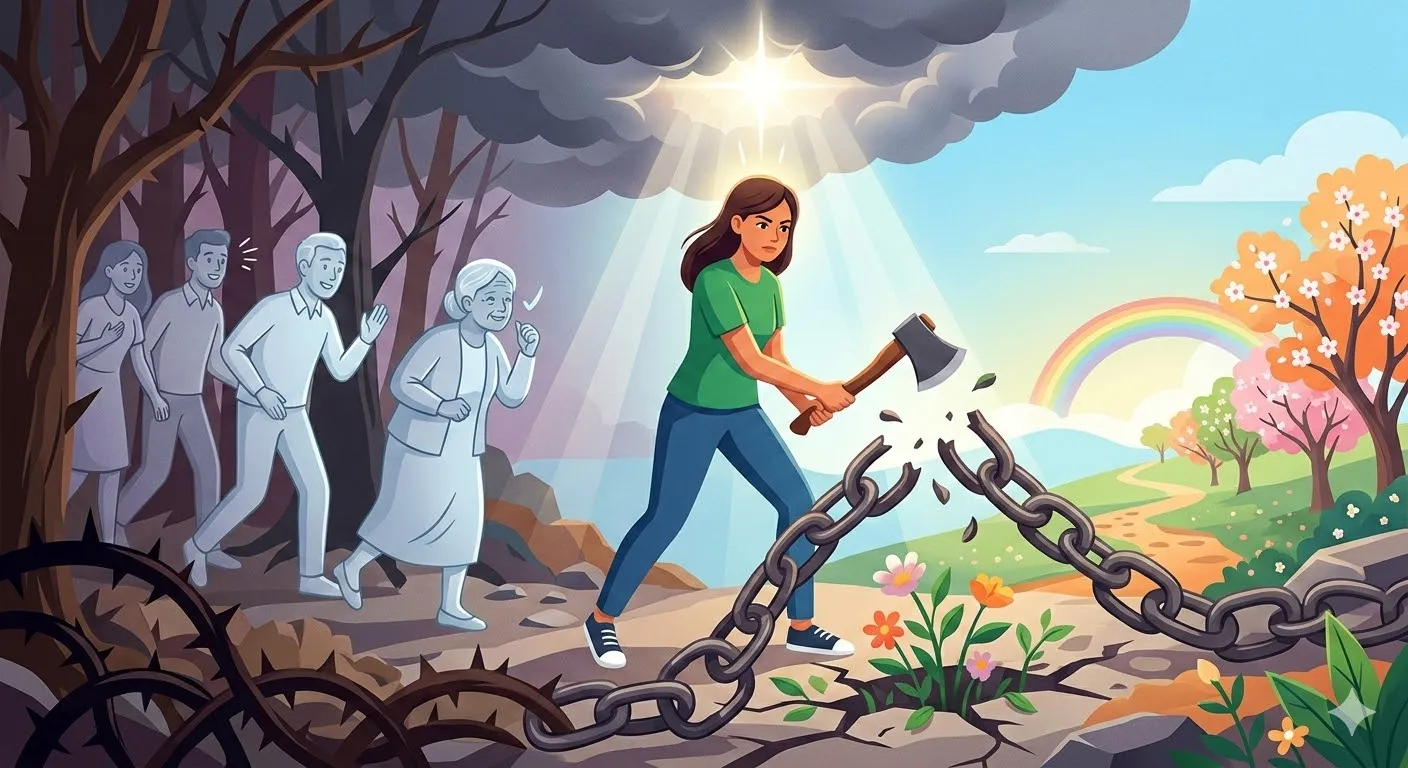

A deep and often unsettling question echoes in the quiet corners of the church: Can a Christian have a demon? For many, the idea seems contradictory. How can light and darkness coexist within a person who has been redeemed by Christ? This topic often causes discomfort, leading to hushed conversations or outright dismissal. Yet, countless believers find themselves trapped in cycles of addiction, depression, torment, and fear that prayer and discipline alone cannot seem to break.
The truth is, the conversation around demonic influence and the need for deliverance is not only necessary but vital for the spiritual health and freedom of the church. This comprehensive article will explore the biblical and theological foundations that answer this critical question. We will unpack what it means to be “demonized,” differentiate between possession and influence, and provide a clear, scripturally-supported path toward the complete freedom that Jesus promised.
This is not about fear-mongering. It’s about empowerment. It’s about understanding that your salvation is a multifaceted gift that includes not just justification for your spirit, but also healing for your soul and wholeness for your life.
Understanding the Three-Part Human: Spirit, Soul, and Body
To properly answer the question, “Can a Christian have a demon?” we must first understand the way Scripture describes human nature. We are not monolithic beings; we are complex, created in God’s image as three-part entities: spirit, soul, and body.
- Spirit (Pneuma): This is the core of who you are, the part that connects directly with God. When you are born again, your human spirit is made new and sealed by the Holy Spirit (2 Corinthians 5:17, Ephesians 1:13). This part of you is eternally secure in Christ. A demon cannot “possess” or own your reborn spirit.
- Body (Soma): This is your physical flesh, your earthly vessel. It is subject to sickness, decay, and physical temptation.
- Soul (Psyche): This is the battlefield. Your soul consists of your mind (thoughts, beliefs), your will (choices, decisions), and your emotions (feelings, reactions). It is the seat of your personality.
When you accept Jesus, your spirit is instantly regenerated. However, your soul and body are not. The Bible calls this process sanctification, the ongoing work of being made holy and whole. This is where the enemy finds his opportunities.
The Battle for the Soul
The Apostle Paul makes this distinction clear in Romans 12:2 when he urges believers to be “transformed by the renewing of your mind.” Your mind, a key part of your soul, is in a process of being renewed. It doesn’t happen automatically at salvation. This is why a Christian can have a demon influence their life; the enemy seeks to establish strongholds not in your redeemed spirit, but in the un-renewed areas of your soul and body.
Key Distinction: Possession vs. Demonization
| Concept | Possession (Full Ownership) | Demonization (Influence/Control) |
|---|---|---|
| Primary Target | The entire person, spirit included. | The soul (mind, will, emotions) and/or body. |
| Applicable To | Unbelievers whose spirits are not sealed by the Holy Spirit. | Believers, through unaddressed sin, trauma, or spiritual entry points. |
| Biblical Term | Not a direct term. The concept implies ownership. | Daimonizomai (Greek), meaning “to be under the influence of a demon.” |
| Christian Experience | A born-again Christian’s spirit cannot be possessed by a demon. | A Christian can be demonized, experiencing torment or control in areas of their soul or body. |
Understanding this difference is crucial. Asking, “Can a Christian be possessed?” is the wrong question. The more accurate and biblically-supported question is, “Can a Christian be demonized?” The answer to that is a clear yes.
Biblical Evidence: When Demons Interact with Believers
The argument that a believer is entirely immune to demonic influence falls apart when examined under the light of Scripture. The New Testament is filled with warnings and examples directed specifically at the church.
1. Paul’s Direct Warning: Do Not Give the Devil a Foothold
In Ephesians 4:26-27, Paul is speaking directly to the saints in Ephesus, born-again, Spirit-filled believers. He says, “‘In your anger do not sin’: Do not let the sun go down while you are still angry, and do not give the devil a foothold.”
The Greek word for “foothold” is topos, which means “a place,” “a location,” or “an opportunity.” Paul’s instruction is a clear acknowledgment that a believer’s actions (like harboring unforgiveness and anger) can grant a spiritual access point to the enemy. If a Christian could not have a demon or be influenced by one, this warning would be meaningless. The enemy is always looking for legal ground to stand on in a believer’s life.
2. The Case of Ananias and Sapphira
In Acts 5, we find Ananias and Sapphira, members of the early, vibrant Jerusalem church. After they lie about their offering, the Apostle Peter confronts Ananias, not by questioning his psychology, but by identifying the spiritual source of the sin. Peter asks, “Why has Satan filled your heart to lie to the Holy Spirit?” (Acts 5:3).
This is a shocking statement. Peter, speaking under apostolic authority, declares that Satan had filled the heart of a member of the church. This wasn’t just an external temptation; it was an internal operation. Their sin of deception, rooted in greed and pride, became a doorway for Satanic influence right in the center of the first great revival.
3. Judas Iscariot: A Disciple Who Opened the Door
Judas walked with Jesus for three years. He was chosen as one of the twelve, participated in ministry, and heard the same teachings as Peter, James, and John. Yet, the Bible records that “Satan entered into him” (John 13:27).
While some argue Judas was never a true believer, his story serves as a powerful example of how proximity to Jesus is not a guarantee of immunity. Judas harbored unrepentant sin, specifically greed (John 12:6), which created a vulnerability. This unresolved issue in his soul became the entry point for Satan to take direct control and lead him to the ultimate betrayal. His spirit was not surrendered, leaving his soul wide open.
4. The Corinthian Believer Handed Over to Satan
In 1 Corinthians 5, Paul addresses a case of severe, unrepentant sexual sin within the Corinthian church. His prescribed solution is radical: “hand this man over to Satan for the destruction of the flesh, so that his spirit may be saved on the day of the Lord” (1 Corinthians 5:5).
This passage is profoundly revealing:
- He is a believer: The goal is the salvation of his spirit, indicating he is part of the covenant community.
- Deliverance from sin: Paul’s action is a form of spiritual discipline designed to bring the man to repentance.
- Spiritual jurisdiction: Paul recognizes that by removing the protective covering of the church, the man would fall under Satan’s influence, which would hopefully lead him to “wake up” and repent.
This again confirms that a believer’s life, specifically their “flesh” or un-sanctified areas, can be subject to demonic attack when sin provides the legal right.
How Do Demons Gain Access to a Christian’s Life?
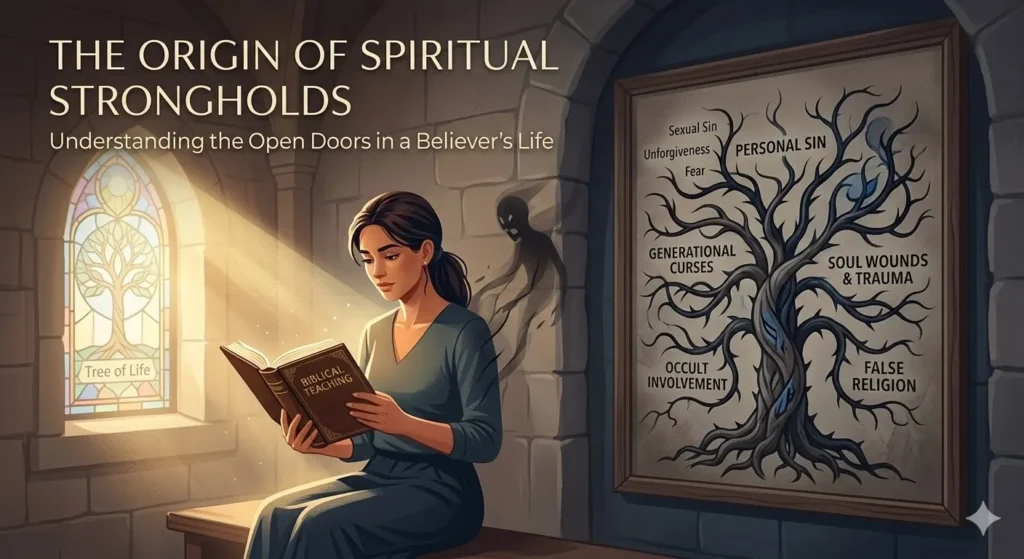
If a Christian can have a demon operating in their soul or body, how does it get there? Demons are legalists. They look for open doors, or legal rights, to enter and establish a stronghold. These doors are often opened through sin, trauma, and deception.
Common Spiritual Entry Points:
- Personal Sin: Unconfessed and unrepentant sin gives the enemy a foothold. This includes:
- Sexual Sin: Fornication, adultery, pornography, and lust create deep soul ties and open doors to spirits of lust and perversion.
- Unforgiveness, Bitterness, and Anger: Holding onto resentment is one of the most common ways believers give ground to the enemy (Ephesians 4:26-27, 2 Corinthians 2:10-11).
- Fear and Unbelief: Choosing to operate in fear rather than faith in God’s promises can open the door to a spirit of fear (2 Timothy 1:7).
- Generational Curses and Iniquities: The Bible speaks of the consequences of sin being passed down through generations (Exodus 20:5). This doesn’t mean you are guilty of your ancestors’ sin, but you may be dealing with the spiritual consequences. Demonic spirits can gain access to a family line through idolatry, occult involvement, or major sins committed by ancestors, creating patterns of addiction, poverty, divorce, and sickness.
- Soul Wounds and Trauma: Deep emotional wounds from abuse, rejection, neglect, or other traumatic events can fracture the soul. Demonic spirits are drawn to these wounds like sharks to blood. They attach themselves to the pain, bitterness, and unforgiveness, creating strongholds of depression, fear, and infirmity.
- Occult Involvement: Any participation in activities like witchcraft, divination, astrology, Ouija boards, tarot cards, or even certain “new age” practices is a direct invitation to demonic spirits. This is considered idolatry and treason in the spiritual realm. Learn more about the dangers from a trusted source like the Billy Graham Evangelistic Association.
- False Religion and Doctrines: Engaging in cults or adopting doctrines that twist the nature of God, Jesus, and the Holy Spirit can open a believer up to “deceiving spirits and things taught by demons” (1 Timothy 4:1).
The Solution Is Deliverance: Part of Your Salvation Package
If a Christian can have a demon, what is the solution? The answer is not shame, more self-discipline, or psychological counseling alone. The solution is a ministry that Jesus and the early church practiced regularly: deliverance.
In Philippians 2:12, Paul tells us to “work out your own salvation with fear and trembling.” The Greek word for salvation here is sōtēria. This word implies much more than just a ticket to heaven. It is the noun form of sozo, a powerful verb used throughout the New Testament that means:
- To save
- To heal
- To deliver
- To make whole
- To set free
Salvation (sozo) is a complete package. It includes the healing of your body, the deliverance of your soul from demonic oppression, and the restoration of your entire being. When you “work out” your salvation, you are actively partnering with the Holy Spirit to apply the finished work of the cross to every area of your life, spirit, soul, and body. Deliverance is simply claiming the freedom from demonic torment that Jesus already purchased for you.
Why the Modern Church Has Neglected Deliverance
For centuries, much of the Western church has shied away from deliverance ministry due to:
- Bad Theology: The mistaken belief that a Christian cannot have a demon led to the conclusion that deliverance is only for unbelievers.
- Fear of the Supernatural: A rationalistic worldview has made many uncomfortable with the spiritual realities of demons and spiritual warfare.
- Lack of Training: Most pastors and leaders are not equipped to recognize the signs of demonic oppression or how to minister deliverance effectively.
- Focus on Behavior Modification: The church has often substituted true spiritual freedom with programs aimed at modifying behavior, which only trims the leaves without pulling up the root.
This neglect has left millions of believers saved but not free, living in a state of spiritual torment they are told shouldn’t exist.
The Path to Freedom: How Deliverance Works
Walking in freedom is a process of surrender, repentance, and actively enforcing Christ’s authority. While it is often best to seek deliverance from mature, trained ministers, the principles of freedom are available to every believer.
Steps to Receiving and Maintaining Your Freedom:
- Honest Self-Examination: Ask the Holy Spirit to reveal any open doors in your life. Be brutally honest with yourself about sin, unforgiveness, trauma, and generational patterns.
- Repentance and Confession: True repentance is not just saying sorry; it’s turning away from the sin. Verbally confess your sins to God and, where appropriate, to a trusted believer (1 John 1:9, James 5:16).
- Renounce the Enemy: Verbally renounce the sin and the demonic spirits associated with it. For example, “I renounce the spirit of fear and its hold on my life. I will not partner with it any longer.”
- Forgive Everyone: Forgiveness is a non-negotiable key to freedom. Verbally choose to forgive anyone who has ever hurt you, including yourself. This breaks the enemy’s legal right to torment you based on unforgiveness.
- Cast Out the Demons: In the name of Jesus, command the spirits to leave. You have authority in His name (Luke 10:19, Mark 16:17). Say, “In the name of Jesus Christ, I command any spirit of (fear, lust, rejection, infirmity, etc.) to leave me now!”
- Renew Your Mind: Freedom is maintained by filling the newly empty space with God’s truth. Saturate your mind with Scripture. Declare God’s promises over your life daily. This is how you are “transformed by the renewing of your mind” (Romans 12:2).
- Seek Community: Connect with a healthy, Spirit-filled church or small group where you can be supported and held accountable. Isolation is a key strategy of the enemy.
Conclusion: Embrace Your Full Inheritance in Christ
The question, “Can a Christian have a demon?” is not meant to inspire fear, but to awaken you to the fullness of the freedom available in Jesus Christ. Yes, a believer’s soul and body can be afflicted by demonic spirits through open doors. But the power of the cross is greater than any stronghold, and the authority of Jesus’ name is sufficient to set every captive free.
Salvation is more than a past event; it is a present-day reality that you are invited to walk out every day. It is a journey of becoming whole, spirit, soul, and body. Don’t settle for being saved but still in bondage. Jesus came so that you might have life and have it to the full (John 10:10). That includes freedom from demonic torment.
Embrace the ministry of deliverance as an essential part of your Christian walk. Repent, renounce, forgive, and cast out anything that stands in the way of your complete freedom. It is time for the church to reclaim this powerful ministry and see believers truly set free, just as Jesus promised: “So if the Son sets you free, you will be free indeed” (John 8:36).
Frequently Asked Questions (FAQ)
1. Is there a difference between demonic oppression and demonic possession?
Yes. Possession implies ownership and control over a person’s entire being, including their spirit. This cannot happen to a born-again Christian whose spirit is sealed by the Holy Spirit. Oppression (or demonization) is when a demonic spirit harasses, torments, or influences a person’s soul (mind, will, emotions) or body. Christians can and do experience demonic oppression.
2. If I have a demon, does that mean I’m not really saved?
No. Your salvation is based on your faith in the finished work of Jesus Christ, which makes your spirit new. Having a demonic stronghold in your soul or body does not nullify the salvation of your spirit. It simply means there is an area of your life that has not yet come under the complete lordship of Jesus Christ and needs to be cleansed.
3. Isn’t this just a psychological issue? Why bring demons into it?
While psychological issues are real and often intertwined, the Bible presents a spiritual reality that coexists with our physical and mental state. Many conditions that do not respond to traditional therapy or medication have a spiritual root. Jesus Himself frequently addressed the spiritual root of sickness and torment by casting out demons (e.g., the boy with seizures in Matthew 17). True freedom often requires addressing both the spiritual and the psychological dimensions.
4. Can medication for anxiety or depression be a bad thing?
Not at all. Medication can be a helpful tool that provides stability and relief, and Christians should not feel ashamed for using it under a doctor’s care. However, medication often manages symptoms rather than curing the root cause. If the root is spiritual, medication alone will never bring complete freedom. It’s wise to pursue spiritual deliverance alongside any medical treatment.
5. How do I know if my problem is demonic or just my own “flesh”?
It can be difficult to tell, as the two are often linked. Some indicators of a demonic stronghold include:
- Cycles of sin you cannot break despite sincere repentance.
- Intrusive, blasphemous, or suicidal thoughts that feel foreign.
- Irrational fear, rage, or depression that descends without cause.
- A physical inability to pray, read the Bible, or speak the name of Jesus.
- Chronic sickness or pain that doctors cannot diagnose.
If you suspect a demonic issue, it is always best to pursue deliverance. If it’s just the flesh, no harm is done. If it is a demon, you will find freedom.
6. Where can I find a safe and biblical deliverance ministry?
Finding a reputable ministry is key. Look for ministries that:
- Operate with love, honor, and compassion.
- Are firmly grounded in Scripture.
- Emphasize repentance and the authority of Jesus, not the power of the minister.
- Do not charge money for deliverance.
Start by asking a trusted pastor or Christian mentor for a recommendation. You can also research established international ministries known for their balanced approach, such as those listed by organizations like the International Society of Deliverance Ministers. Always pray for discernment before engaging with any ministry.